
Mobi-C® Cervical Disc
Mobi-C® - the leading choice for cervical motion preservation
Motion Preservation – Bone Sparing – Long Term Results
Manufactured by LDR Medical - Highridge Medical
The Original Artificial Cervical Disc
Mobi-C® Cervical Disc was the first cervical disc in the United States approved to treat more than one level of the cervical spine. Mobi-C was determined by the FDA to be statistically superior to fusion at seven years for two-level cervical disc replacement, based on the primary study endpoint of a prospective, concurrently controlled and randomized, multi-center clinical trial [2,3]. At 10 years, all patient-reported outcomes were equivalent to or improved from seven years [2]*.
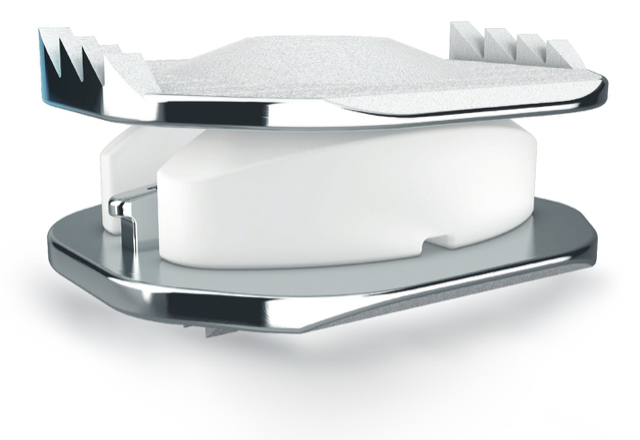
Quick Overview
- Over 225,000 Mobi-C® Discs have been implanted in 25 countries since 2004 [1].
- Mobile Bearing Technology: the controlled mobility of the patented mobile core is the foundation of Mobi-C
- Self-Adjusting: designed to adapt to the Instantaneous Axis of Rotation
- One-Step Insertion: no invasive keels or screws
- Bone Sparing: no invasive drilling or chiseling required
- Pre-Assembled Implants: delivered pre-assembled on a disposable PEEK implant holder (cartridge)
- Indicated for reconstruction of one or two degenerated disc(s) from C3 to C7
Mobile Bearing Technology
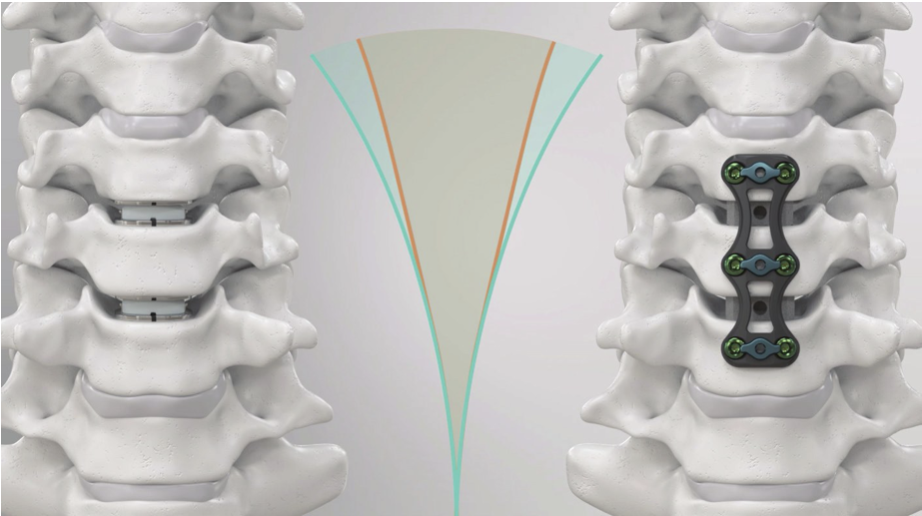
Restore natural motion with Mobi-C’s self-adjusting mobile core.
The center of rotation at each level of the cervical spine is variable and constantly changing [4]. Mobi-C was designed to adapt to the Instantaneous Axis of Rotation through its self-adjusting mobile core. The mobile core allows the vertebrae above and below the disc to move, to maintain normal neck motion.
Mobi-C moves with the spine and does not dictate a predetermined, fixed axis of rotation. This facilitates independent and coupled motion similar to natural cervical spine motion.
A Material Difference
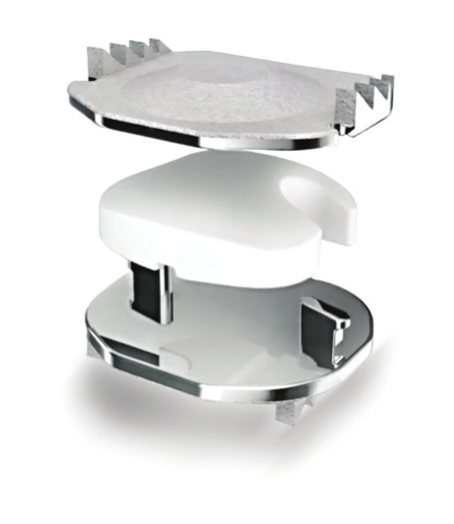
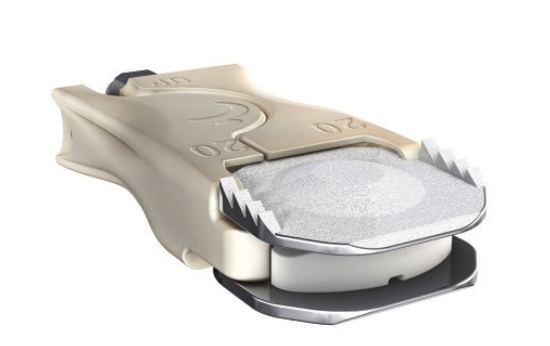
Mobi-C is composed of three parts: two metal plates and a medical grade polyethylene insert in between. The top plate rotates over the domed insert, allowing for a continuous path of cyclic movements: Flexion-Extension (FE), Lateral Bending (LB) and Axial Rotation (AR). Additionally, Mobi-C possesses Axial Compressibility similar to the native disc [5].
Differentiated Design, Proven Materials
1. Plasma Sprayed Titanium and Hydroxyapatite Coated Endplates
Encourage bony ongrowth for long term stability.
2. Superior Dome and Lateral Inclined Teeth
The superior dome is designed to match the natural, bony anatomy, enabling short and long term stability. The lateral inclined teeth purchase into the apophyseal ring to provide initial stability and are designed to resist migration.
3. Patented, Mobile Bearing Core
Ultra-High Molecular Weight Polyethylene insert. Domed surface designed to articulate angularly with the superior endplate; flat bottom designed to translate up to 1 mm and rotate on the inferior endplate.
4. Cobalt Chromium Molybdenum Alloy Endplates
Tabs provide a safety stop designed to control mobility and to resist expulsion.
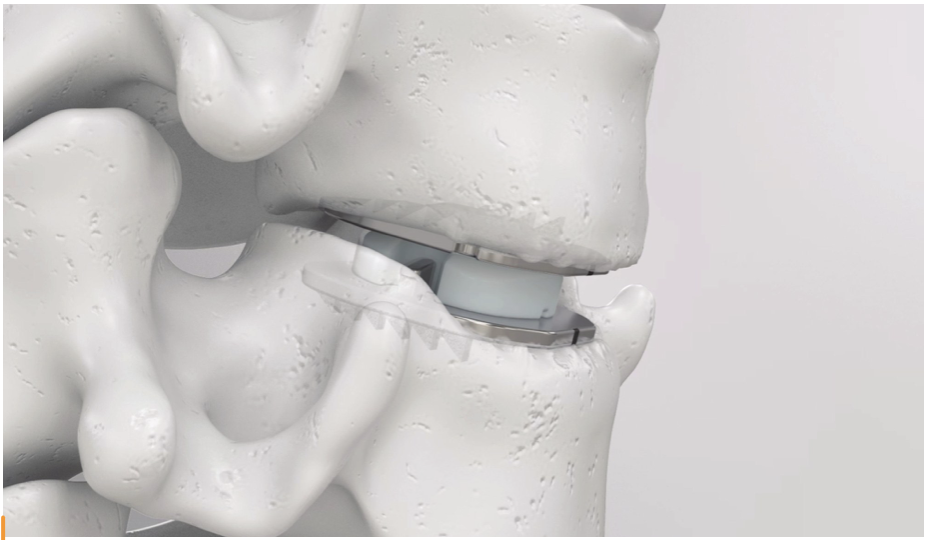
More sizes for more patients
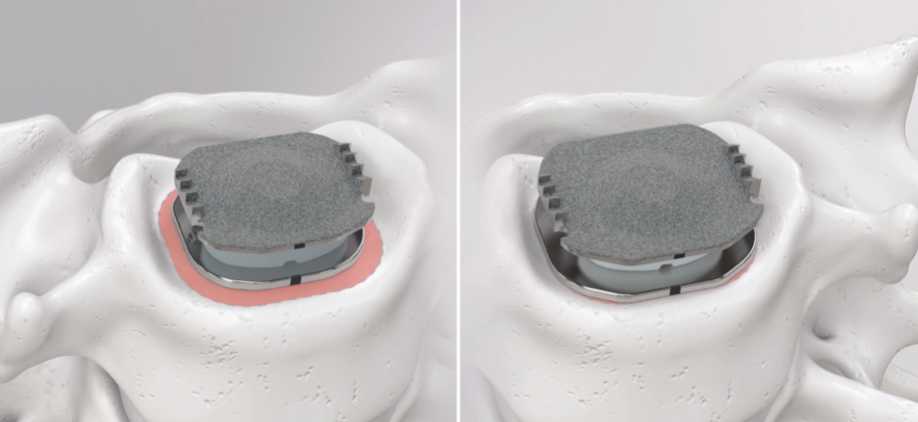
Maximize endplate coverage while treating small and collapsed cervical discs.
In Europe, Mobi-C® is available in 32 sizes, combining footprint and height options to fit each patient’s anatomy and maximize endplate coverage.
One Step Insertion. No invasive keels or screws.
1. Pre-Assembled Implants
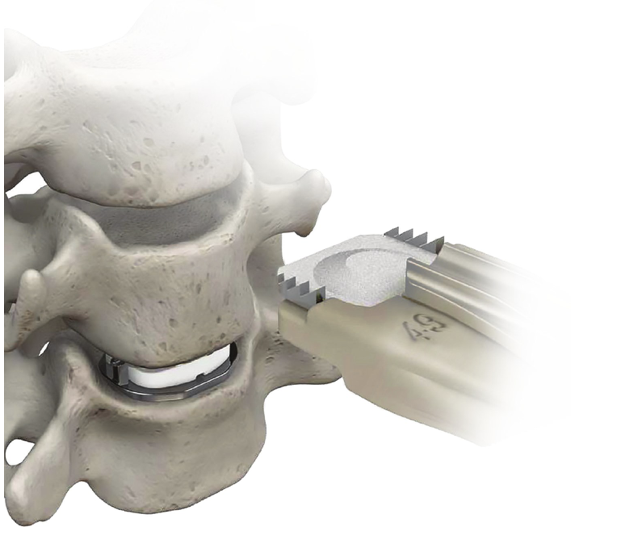
Mobi-C® is delivered pre-assembled on a disposable PEEK implant holder (cartridge), which fits easily on the implant inserter, saving operative steps.
2. Radiolucent View
The PEEK implant holder (cartridge) allows a radiolucent view of the implant for optimal positioning.
3. Bone Sparing: Intact Endplates
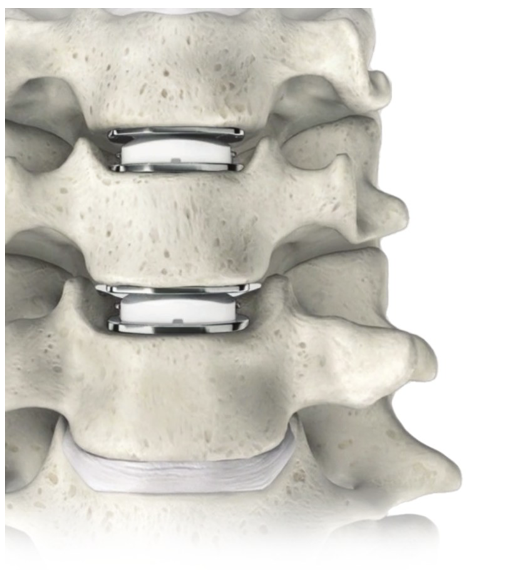
Mobi-C® implantation requires no invasive keels or screws, no bone removal for keel preparation, and no additional operative steps for keel cutting. No invasive drilling or chiseling are required. Intact endplates provide a preserved surface for the implant, ideal for two-level implantation, and intraoperative flexibility to optimize implant positioning.
Clinical Data
- Over 225,000 Mobi-C Discs implanted in 25 countries since 2004 [1]
- 599 patients enrolled in the FDA IDE clinical trial, which began in April 2006
- Over 10 years of clinical data for 1- and 2-level cervical disc replacement [2]
- First cervical disc FDA-approved to treat one and two levels of the cervical spine (August 2013)
Long Term Results: 10-Year Outcomes (Neurosurgery 2021)
Upon completion of the 7-year FDA Investigational Device Exemption (IDE) study of the Mobi-C Cervical Disc, follow-up continued on a subset of patients from nine high enrolling centers [2].
- Mobi-C continues to be a safe and effective treatment for 1- and 2-level cervical degeneration.
- At ten years, all patient-reported outcomes were equivalent to or improved from seven years.
- Between seven-year and ten-year follow-up, C2-C7 range of motion (ROM) and sagittal alignment were maintained.
- Segmental ROM in flexion/extension and lateral bending was maintained in both 1-level and 2-level constructs.
- Clinically relevant radiographic adjacent segment pathology (rASP) did not differ significantly in either 1-level or 2-level patients.
- No subsequent surgery at an adjacent level after seven years.
Level 1
Prospective, concurrently controlled and randomized, multi-center clinical trial (FDA IDE)
This study compared Mobi-C to the current standard of care, anterior cervical discectomy and fusion (ACDF), for both one- and two-level indications. Mobi-C was determined by the FDA to be statistically superior to fusion at seven years for two-level cervical disc replacement, based on the primary study endpoint [3].
Radcliff K, et al. Int J Spine Surg. 2017;11(4):244-262.
Would you like to know more about Mobi-C®?
Book your personalised appointment with one of our experts.
References
* Clinical data from the United States (FDA IDE study, US implant design). See the notice above.
[1] Data on file. Based on available market data at the time of publication.
[2] Kim K, Hoffman G, Bae H, et al. Ten-Year Outcomes of 1- and 2-Level Cervical Disc Arthroplasty From the Mobi-C Investigational Device Exemption Clinical Trial. Neurosurgery. 2021;88(3):497-505.
[3] Radcliff K, Davis RJ, Hisey MS, et al. Long-term evaluation of cervical disc arthroplasty with the Mobi-C Cervical Disc: a randomized, prospective, multicenter clinical trial with seven-year follow-up. Int J Spine Surg. 2017;11(4):244-262.
[4] Amevo B, et al. Instantaneous axes of rotation of the typical cervical motion segments: a study in normal volunteers. Clin Biomech (Bristol, Avon). 1991;6(2):111-7.
[5] Khachatryan A, Permeswaran V, et al. Mobi-C Possesses Axial Compressibility Similar to the Native Disc. Zimmer Biomet Spine, Inc. 2020.
[6] Highridge Medical – cervicaldisc.com, “Complications, risks & precautions” (Mobi-C IDE clinical study data, 1-level, 5 years).
Regulatory Information
Manufacturer: LDR Médical (Highridge Medical group)
Device name (IFU): Mobi-C® Plug & Fit: Sterile cervical disc prosthesis.
Device description (IFU): Mobi-C® prosthesis is a device for cervical intervertebral disc replacement (C3/C4, C4/C5, C5/C6, C6/C7) in order to restore segmental motion and disc height. It consists of a superior spinal plate, an inferior spinal plate and a mobile insert. Single use.
Indications for use (EU IFU): The Mobi-C® Cervical Disc Prosthesis is indicated in skeletally mature patients for reconstruction of one or two degenerated disc(s):
- From C3 to C7;
- With intractable symptomatic cervical disc disease (SCDD), defined as radiculopathy and/or myeloradiculopathy (neck pain, arm pain, and/or a functional neurological deficit in a specific nerve root C4-C7), and refractory to non-operative treatment conducted during at least six weeks;
- With at least one of the following conditions confirmed by imaging (CT, MRI, or X-rays): herniated nucleus pulposus; discarthrosis, with/without foraminal or central osteophytosis, with/without loss of mobility, with/without kyphotic evolution (non structural), with/without loss of disc height in comparison to adjacent discs.
- The Mobi-C® is implanted via an open anterior approach following complete discectomy.
CE marking: Medical device bearing the CE 0459 mark (first CE marking: 2007).
Notified body: GMED (No. 0459).
Instructions for use (IFU): https://ifu.highridgemedical.com/ (ref. IFU MB 2 J ML-S)
Proper use. This medical device is intended for healthcare professionals and must be used in accordance with its intended purpose and with the indications, contraindications, warnings, precautions and instructions defined by the manufacturer.
Before use, carefully read the instructions for use (IFU), the labeling and, where applicable, the safety and training documents applicable to the device.
Important information. The information on this page is intended for healthcare professionals and aims to present the device within the scope of its intended purpose. It does not replace the manufacturer’s instructions for use, the training required to use the device, or the clinical judgement of the healthcare professional. Availability of the device, and of certain references, configurations or indications, may vary by country and applicable regulatory approvals. It is the user’s responsibility to check that the device and its intended use are authorized in the country concerned.